
How Southern California Powers the Global Supply Chain and Shapes the Industrial Real Estate Market
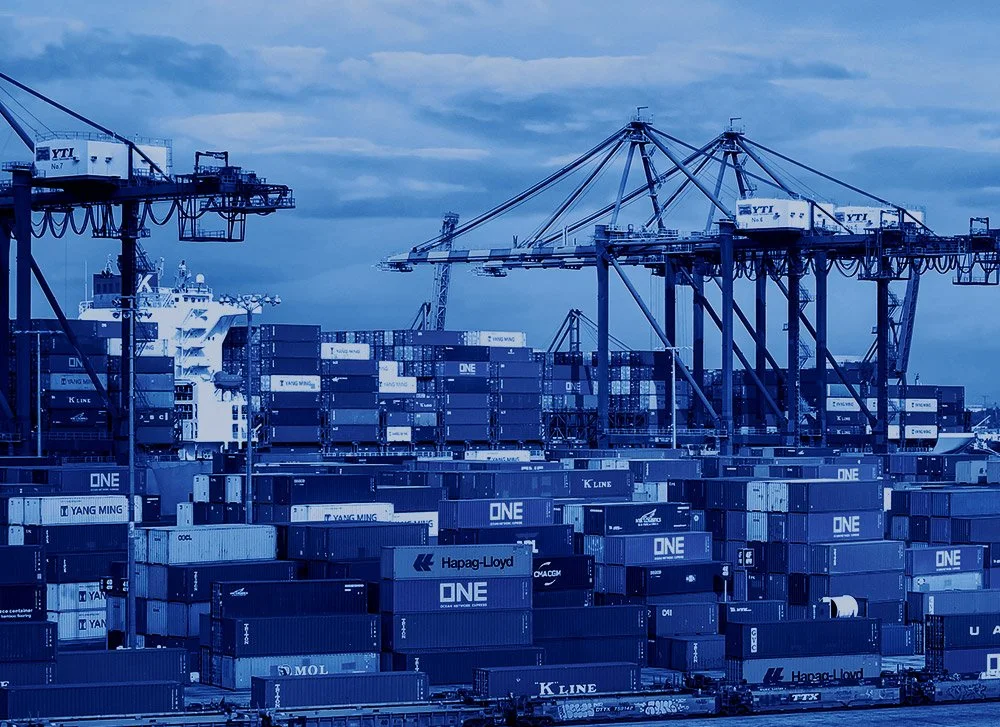
Nearly 40% of all containerized imports to the US move through the Ports of LA and Long Beach.
Southern California is one of the most critical arteries in the global supply chain. Nearly 40% of all containerized imports to the United States move through the Ports of Los Angeles and Long Beach, making the region an essential gateway for goods from Asia and beyond.
Every day, tens of thousands of trucks, trains, and cargo-handling operations keep this network in motion, feeding inventory to inland hubs, retail centers, and manufacturing sites across the country. This constant flow of goods drives real estate decisions at every level — from site selection to warehouse design to lease negotiations. For landlords, tenants, developers, and investors, global trade is not a distant variable. It is a primary force shaping how Southern California builds, uses, and reinvests in industrial and commercial property.
What Is the Global Supply Chain?
The global supply chain refers to the full system of moving goods from point of origin to end user, spanning continents and involving multiple stages. It includes manufacturing, freight movement, warehousing, and last-mile distribution. Key components relevant to real estate include ports, rail infrastructure, major trucking corridors, and third-party logistics providers.
Each link in this chain influences where and how space is used. For example, rising import volumes drive demand for modern bulk distribution centers. Changes in cold storage requirements ripple across tenant needs and development pipelines. From the size of the facility to the racking system inside it, every real estate decision is shaped by what moves through the supply chain.
Why Southern California Is Central to Global Supply Chains
Southern California sits at the nexus of the U.S. trade network. The twin Ports of Los Angeles and Long Beach handle roughly 40 percent of containerized imports into the country, making them a critical gateway for trans-Pacific trade. This positions the region as the front line for supply chain activity, influencing how and where industrial real estate is developed.
With direct access to interstate highways and Class I railroads, Southern California enables goods to move efficiently from coast to consumer. This connectivity supports dense networks of last-mile hubs and regional distribution centers. Submarkets like the South Bay and the Inland Empire have evolved around these logistical strengths, seeing sustained development of high-clearance warehouses, cross-dock facilities, and third-party logistics hubs.
How the Global Supply Chain Impacts SoCal Industrial Real Estate
The evolving demands of global trade continue to reshape industrial real estate, requiring properties that meet the specific needs of logistics and distribution tenants. Key factors driving this impact include:
Increased demand for larger, more efficient logistics space that supports automation and faster throughput.
Preference for bulk facilities featuring higher clear heights and ample trailer parking
Strategic proximity to labor pools and transportation hubs to optimize operational efficiency.
Historically low vacancy rates in core markets such as the Inland Empire, intensifying competition for prime locations.
Growth in specialized sectors like cold storage, fueled by shifts in food distribution and pharmaceutical logistics.Rising build-to-suit development as tenants seek tailored solutions to complex supply chain requirements.
Landlords who can provide well-located, modern facilities continue to hold a competitive edge in this tightening industrial market.
Challenges Facing the Global Supply Chain
Despite strong fundamentals, the global supply chain faces persistent pressure. Port congestion, geopolitical uncertainty, and labor actions can disrupt flows, creating volatility in warehouse demand. For example, even short-term disruptions at the ports can ripple into warehousing, trucking, and tenant operations.
At the same time, rising consumer expectations continue to compress delivery windows. Tenants must remain agile, often requiring flexible space options and shorter response times. As these pressures build, real estate strategies must prioritize resilience. Southern California markets are adjusting by emphasizing diversified distribution models, stronger infrastructure investment, and closer alignment between logistics operators and developers.
Key Trends Driving Industrial Real Estate and Logistics Growth in Southern California
Several macro trends are influencing how supply chain users select and configure their real estate:
Nearshoring and reshoring: Many Southern California companies are rethinking overseas dependencies and bringing manufacturing closer to the U.S., increasing demand for domestic distribution space.
Automation: Facilities must now support robotics, high-volume throughput, and smart racking systems, which increases demand for taller buildings and specialized infrastructure.
Long-term leases: In tight submarkets, tenants seek long-term control of strategic locations, creating opportunities for investors and developers alike.
ESG and sustainability: Corporations prioritize locations that support green building standards, renewable energy, and lower emissions from transport.
California’s energy codes, such as Title 24 and CALGreen, require many new industrial facilities to meet strict efficiency and sustainability standards. These regulations are pushing developers to invest in greener designs, improved building systems, and renewable energy integration.
These forces shape both tenant behavior and investor appetite. High-performing facilities meet evolving technical requirements and align with broader corporate goals.
Modernizing SoCal Industrial Real Estate for a New Era of Global Logistics
The long-term outlook for logistics and warehouse assets in Southern California remains strong. Strategic location remains the primary differentiator, especially in markets where land is constrained and tenant competition is intense. The Inland Empire West continues to attract institutional capital for precisely this reason.
Real estate users and investors must track shifts in global trade, including changes in port volumes, alternative shipping lanes, and the emergence of new inland hubs. In response, certain areas are being repositioned for higher and better use. For example, new facilities are being built with modern specs that support higher throughput and efficiency in areas such as Rancho Dominguez and Compton.
As the global supply chain becomes more dynamic, Southern California’s industrial real estate market will continue to serve as a bellwether for the nation. Understanding the intersection of trade logistics and property strategy is no longer optional; it is foundational to making informed decisions in this market.
How to Strategically Navigate Southern California’s Commercial and Industrial Real Estate Market
Partnering with industry experts like The Klabin Company can significantly elevate your decision-making process — with over 60 years of experience specializing in the Southern California industrial and commercial markets, we are dedicated to delivering unparalleled service and expertise tailored to your needs. Our deep knowledge of local market dynamics, coupled with our commitment to integrity and innovation, equips our clients with critical insights into emerging trends and opportunities. We prioritize transparency and collaboration, ensuring that your strategy aligns seamlessly with your business’s growth and operational objectives. By leveraging our extensive network and expertise, you can navigate the complexities of the market to position your business for sustained success in this dynamic and competitive environment.
This blog post is provided for informational purposes only and does not constitute legal, financial, or professional advice. Real estate laws and regulations vary by jurisdiction, and the information herein may not be accurate or applicable to your specific situation. Before making any real estate decisions, consult a qualified local real estate attorney, financial advisor, or other relevant professional. The Klabin Company is not liable for any actions taken based on the information in this article.